Insights into Oncology

Latest updates and research & Real Patient Journey

Nasopharyngeal Carcinoma
Jun 23, 2026

Nasopharyngeal Carcinoma

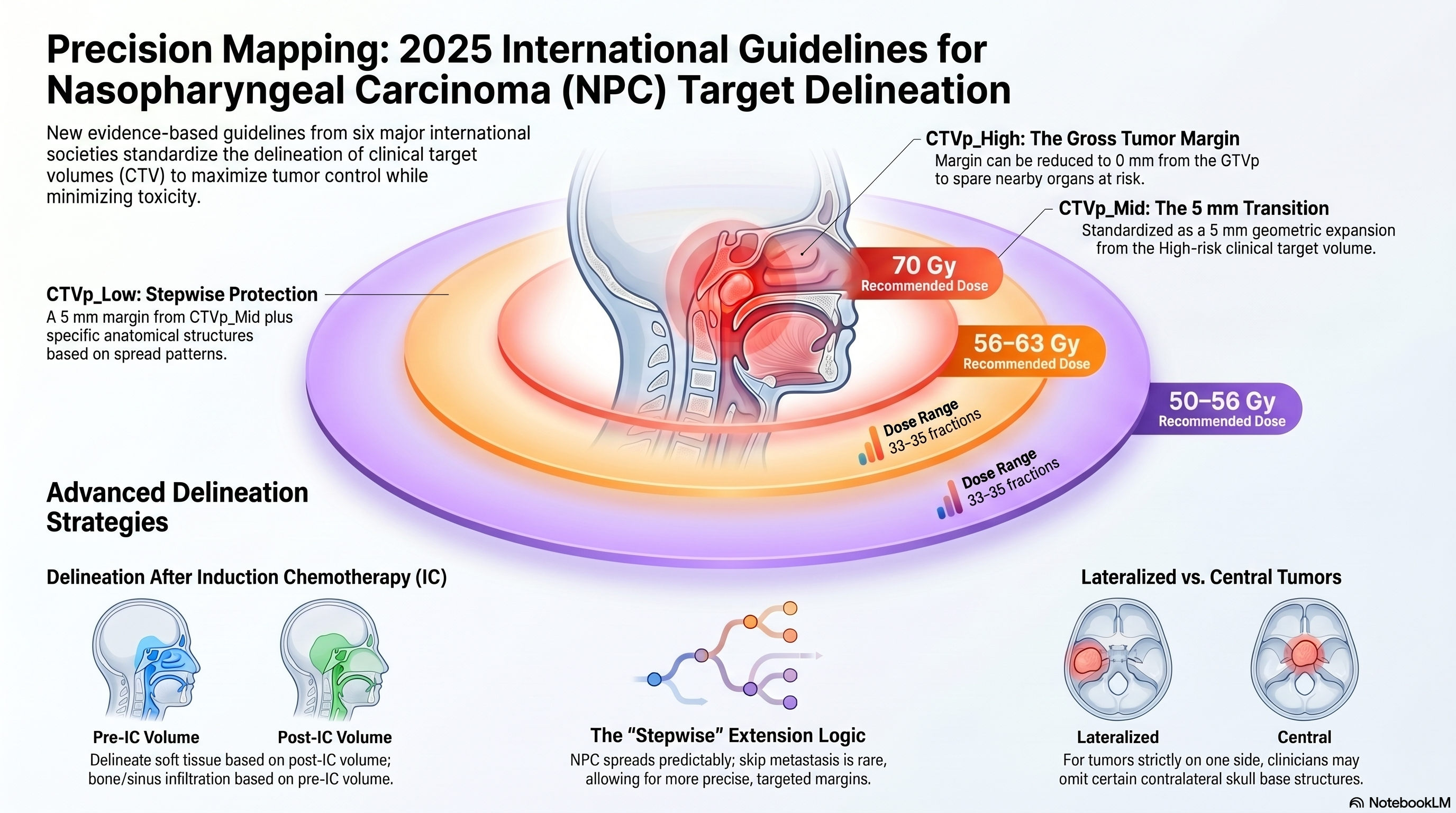
Nasopharynx is a very challangeing part to exucute safe complete dose delivery of Radiotherapy. Every radiatiion oncologist is in fear to complete the treatment doses safely. Alhamdulillah I have been treated cases with complete remmision even after 2-3 years. Showing the 2 cases with 2025 guideline at a row.

D
Dr. Md. Arifur Rahman
Read Full Article
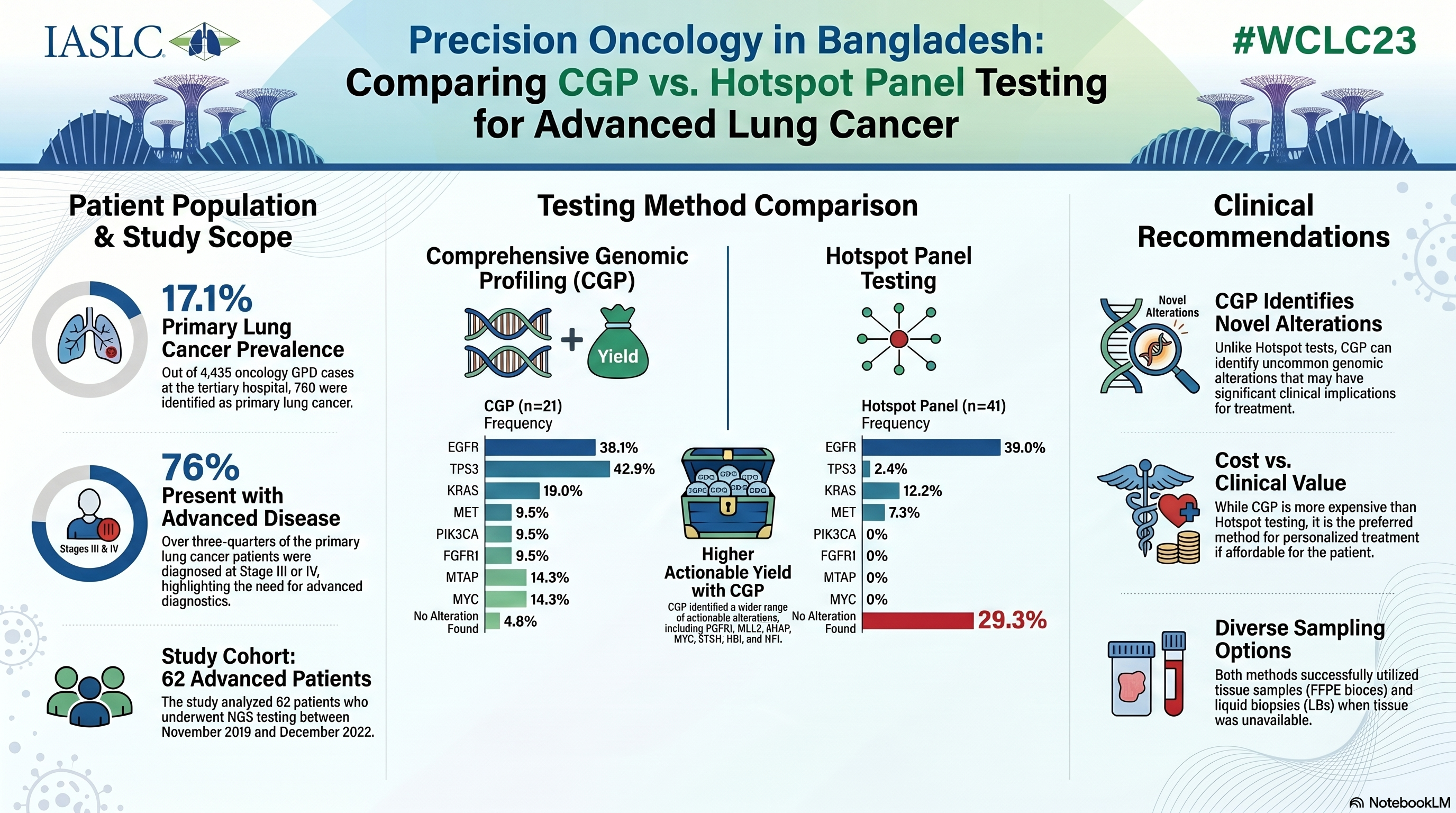
Genomic Alterations in Advanced Lung Cancer Patients Compared via CGP and Hotspot Panel Test in a Bangladeshi Tertiary Hospital
Jun 11, 2026

Genomic Alterations in Advanced Lung Cancer Patients Compared via CGP and Hotspot Panel Test in a Bangladeshi Tertiary Hospital

The provided sources describe a **retrospective observational study** conducted at **Bangladesh Specialized Hospitals Limited**. The study focused on the genomic landscape of advanced lung cancer patients in Bangladesh, specifically comparing two **Next-Generation Sequencing (NGS)** methods. ### **Objective and Methodology** The primary aim was to compare the frequency of genomic alterations identified by **Comprehensive Genomic Profiling (CGP)** and **Hotspot panel tests** in patients with advanced lung cancer. * **Data Set:** Researchers analyzed 4,435 oncology outpatient department (OPD) cases, identifying **760 (17.1%) as primary lung cancer** cases. * **Sample Selection:** Of these lung cancer cases, **76% presented in advanced stages (III-IV)**. * **Testing Group:** The study specifically examined reports from **62 advanced lung cancer patients** who underwent NGS testing between November 2019 and December 2022. * **Method Distribution:** **21 patients** were tested using **CGP**, while **41 patients** were tested using the **Hotspot panel**. ### **Key Findings** The study highlighted significant differences in the efficacy of the two testing methods: * **Detection Rate:** The probability of identifying **no genomic alterations** was much higher with the **Hotspot panel (29.3%)** compared to **CGP (4.8%)**. * **Actionable Alterations:** CGP identified a broader range of **actionable genomic alterations**, including *FGFR1, MLL2, MTAP, MYC, STK11, RB1, NF1, PIK3CA, ARID1A, CCND1,* and *BRCA1/2*. * **Common Mutations:** Both methods showed similar frequencies for common mutations like ***EGFR*** (approximately 38-39%) and ***ALK*** (approximately 5-7%). However, CGP was significantly better at detecting ***TP53*** alterations (42.9% vs. 2.4% for Hotspot). ### **Conclusions and Implications** The researchers concluded that **CGP is superior** to Hotspot panel testing because it has a higher probability of detecting actionable and novel alterations that can inform **personalized treatment approaches**. * **Clinical Preference:** Despite its higher cost, the study recommends **CGP as the preferred method** for patients who can afford it. * **Future Research:** The authors note that the study's **sample size is limited** and may not represent the entire country's population. Consequently, **larger studies** are needed to establish official guidelines for genomic testing in advanced lung cancer patients across Bangladesh.

D
Dr. Md. Arifur Rahman
Read Full Article
Complete Response in Lower Tracheal Malignancy with CCRT
May 05, 2026

Complete Response in Lower Tracheal Malignancy with CCRT

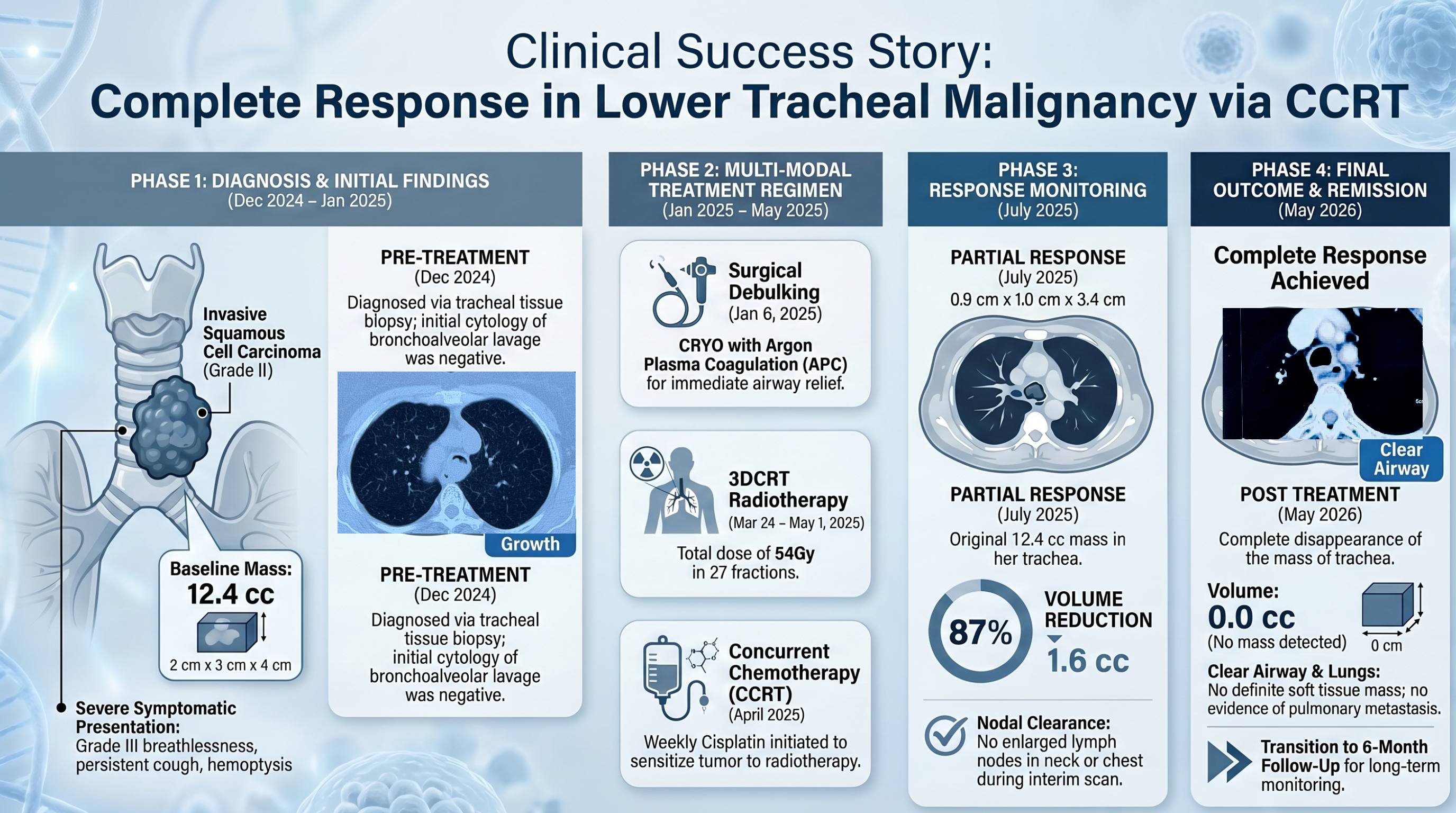
Clinical Success Story: Complete Response in Lower Tracheal Malignancy with CCRT Managing rare airway malignancies often demands a balance of urgency, precision, and multidisciplinary coordination. I would like to share a recent real-world case that highlights the impact of a well-executed multimodal approach. A 61-year-old female presented with severe airway-compromising symptoms—progressive breathlessness, persistent cough, and hemoptysis. Evaluation confirmed invasive squamous cell carcinoma of the lower trachea (Grade II). Baseline disease burden: Tumor volume: 12.4 cc Symptomatic airway compromise Management strategy: Endoscopic debulking with CRYO + APC for immediate airway relief Definitive radiotherapy (3DCRT): 54 Gy in 27 fractions Concurrent weekly Cisplatin-based chemotherapy (CCRT) Response dynamics: Interim imaging showed 87% tumor reduction (down to 1.6 cc) with nodal clearance Final follow-up imaging (May 2026) demonstrated: Complete radiological response No residual tracheal mass No nodal or distant disease This outcome reinforces several key clinical insights: Even in rare central airway tumors, a structured multimodal strategy can achieve curative outcomes CCRT remains a powerful organ-preserving approach in patients not suitable for surgery Early airway stabilization + timely systemic sensitization is critical Real-world data continues to validate outcomes comparable to controlled settings As we continue to build real-world oncology evidence from Bangladesh, such cases highlight the importance of precision planning, multidisciplinary care, and context-adapted treatment strategies. Would be interested to hear thoughts from colleagues managing central airway malignancies—especially regarding optimal RT techniques (3DCRT vs IMRT/VMAT) and systemic intensification strategies. #Oncology #RadiationOncology #CCRT #AirwayTumors #CarcinomaTrachea #RealWorldEvidence #PrecisionOncology #CancerCare #Bangladesh #MultidisciplinaryCare #ClinicalSuccess #BSHL #BSH

D
Dr. Md. Arifur Rahman
Read Full Article
5 Year of Journey of denovo Metastatic CA Rectum
Apr 20, 2026

5 Year of Journey of denovo Metastatic CA Rectum

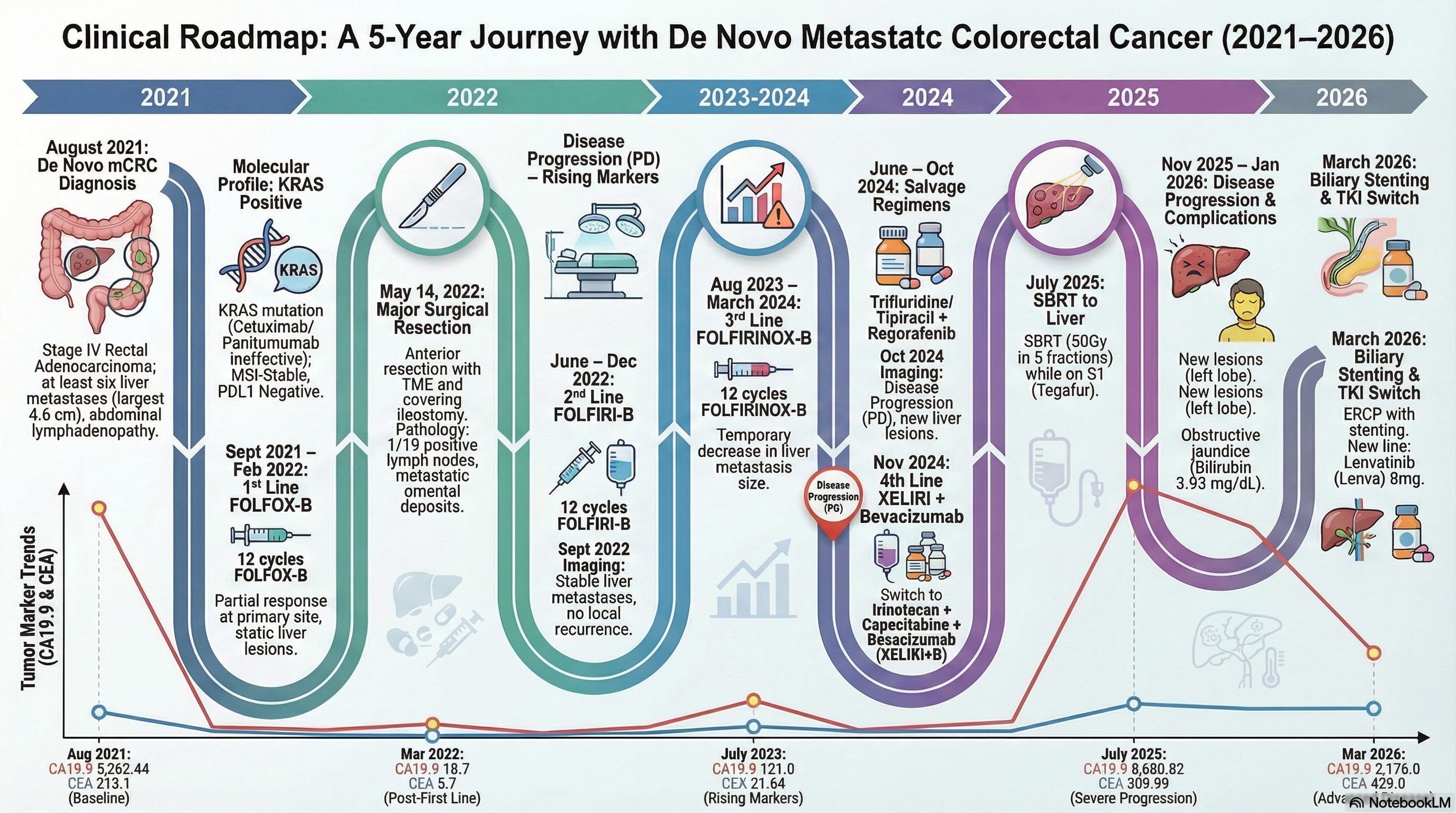
Carcinoma of Rectum with abdominal lymphadenopathy with multiple Liver SOL (Aug 21) > Post Palliative chemotherapy with FOLFOX-B > Capecitabine- Bevacizumab > Underwent surgery > Post 2nd line Palliative ChT with FOLFIRI B> Post FOLFIRINOX-B> On Oral Trifluridine & Tipiracil (D1-5, D8-12) + Regora 80mg, q4w > PD> Post Pal ChT with Irinotecan + Beva> On Oxaliplatin 150mg D1+ Beva 300mg D1 + Trifluridine-tipiracil 45mg> PD (July 25)> Post SBRT to Liver & On S1> PD on liver mass (Nov 2025)> With High Blirubin (Jan 26)> PD> Post ERCP with Stenting (20 March 26)> Expired April 2026

D
Dr. Md. Arifur Rahman
Read Full Article
Head & Neck Cancer Awareness Month | April
Apr 14, 2026

Head & Neck Cancer Awareness Month | April

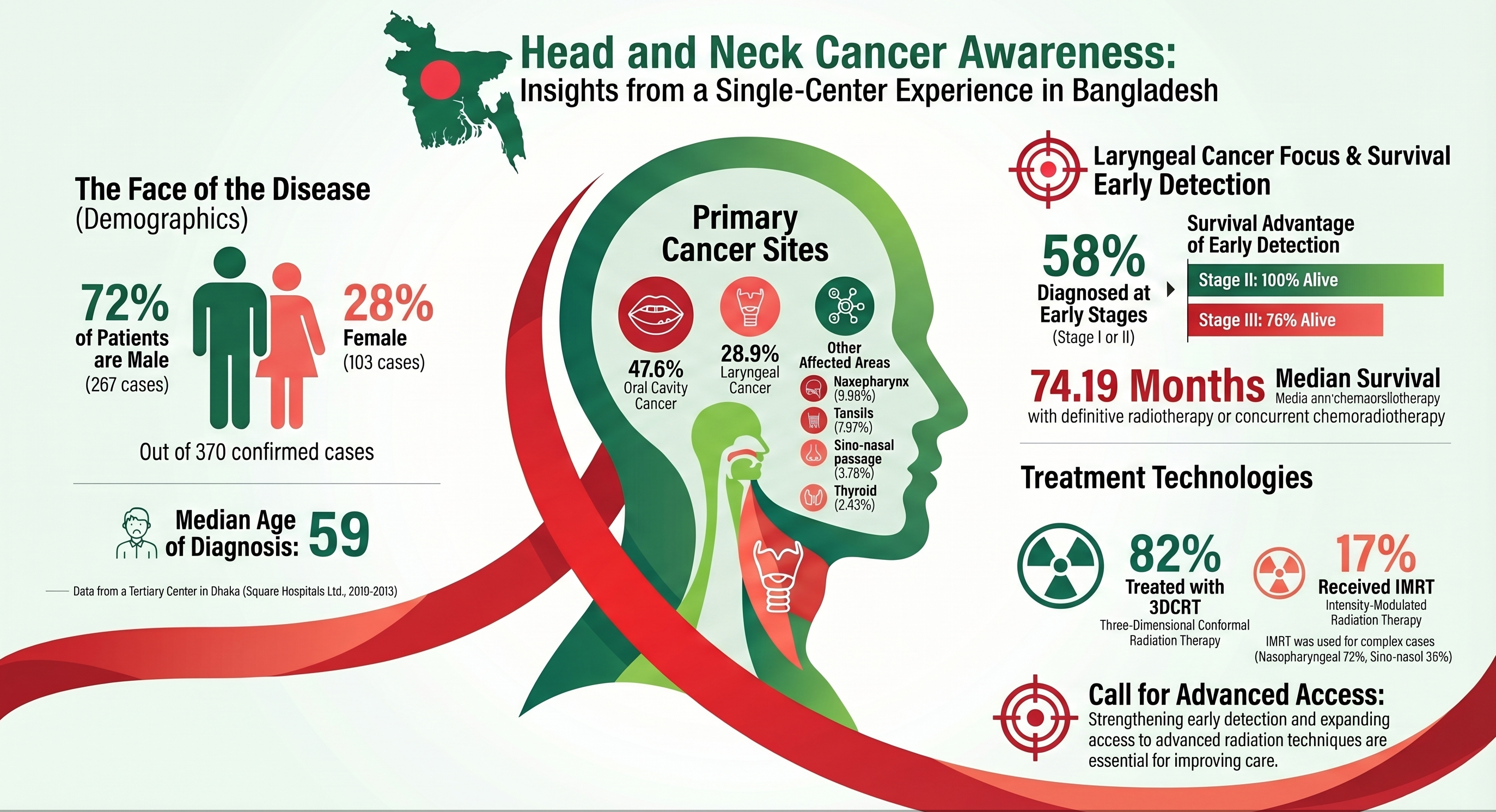
Head and neck cancers represent a significant portion of the cancer burden in South Asia, including Bangladesh. One survey estimated that over one-third (35%) of all cancers in Bangladesh arise in the head-neck region, with carcinoma of the larynx identified as the most common head-neck malignancy

D
Dr. Md. Arifur Rahman
Read Full Article