Medical Insights
•
Rectal Carcinoma : A 5 year Institutional Review at Bangladesh Specialized Hospital (BSH)
D
Dr. Md. Arifur Rahman
Oncology Specialist
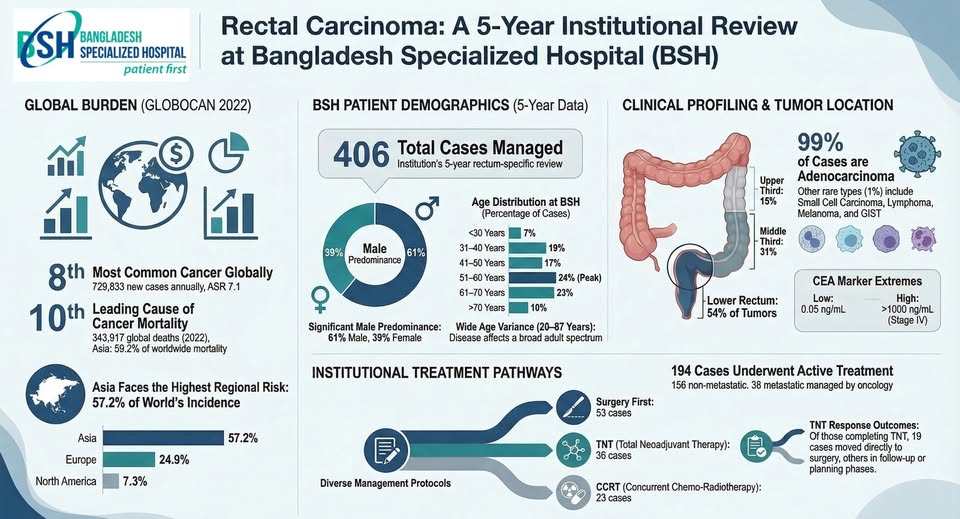
Colorectal Cancer Awareness Month Rectal Cancer in Bangladesh: Insights from BSH (5-Year Institutional Review) Colorectal cancer is an emerging health challenge worldwide. According to GLOBOCAN 2022, it is the 8th most common cancer globally and the 10th leading cause of cancer-related death. At Bangladesh Specialized Hospital (BSH), a 5-year institutional review of rectal cancer cases (n = 406) provides important insights into the disease pattern in our population.
Key Findings from BSH Data
- 406 rectal cancer patients managed in 5 years
- Male predominance:
- 61% Male
- 39% Female
- Age distribution:
- Peak incidence: 51–60 years (24%)
- Significant cases also in 61–70 years (23%)
- Younger patients (<40 years) still represent a notable proportion.
- Tumor location:
- Lower rectum: 54%
- Middle rectum: 31%
- Upper rectum: 15%
- Treatment Pathways at BSH
Among patients receiving active oncologic management:- Surgery-first approach: 53 cases
- Total Neoadjuvant Therapy (TNT): 36 cases
- Concurrent Chemoradiotherapy (CCRT): 23 cases
- Many patients completing TNT proceeded directly to surgery, reflecting the evolving role of modern multimodality therapy in rectal cancer.
- Why Awareness Matters:
Colorectal cancer is highly treatable when detected early. Unfortunately, many patients in Bangladesh still present at advanced stages due to delayed diagnosis.
Common warning signs include:- Rectal bleeding
- Persistent change in bowel habits
- Unexplained weight loss
- Abdominal pain or anemia
- What We Encourage
- Early consultation for symptoms
- Colonoscopy screening in high-risk individuals
- Healthy lifestyle and diet
- Multidisciplinary cancer care
At BSH, we continue to strengthen data-driven cancer care, multidisciplinary treatment, and awareness programs to improve outcomes for colorectal cancer patients in Bangladesh.