Pattern of Practices of Oncologists of Bangladesh in the COVID-19 Era
Published on September 18, 2025
01 Research Methods
This was a cross-sectional survey-type study, based on a questionnaire, which was shared via email to national oncologists and enhanced by snowballing in April–May 2020.
02 Key Results
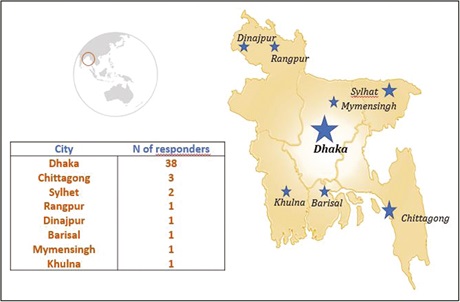
A total of 48 responders joined the survey, mostly clinical and radiation oncologists practicing in specialized cancer centers of the major cities. Patients’ triage for COVID-19 was implemented in 60% of the settings surveyed, and an impact on the clinical care was unanimously reported. Delays and interruptions in cancer treatments were common, as was a reduction of patient volume treated with radiation therapy (RT). Mechanisms for priority-setting to inform clinical decisions were set by 80% of the oncologists, including changes in the treatment protocols––more commonly for palliative care interventions and regarding the RT fractionation; also, alternative therapeutic options were more commonly discussed, particularly when patients were candidate to multimodal treatments. Value-driven and choose-wisely approaches were emphasized. Telemedicine was identified as a mechanism to reduce access to hospitals, but only for selected services (e.g., follow-up) by 78%. Protecting hospitals and health workers were identified as priority interventions to shape effective COVID-19 responses.
03 Conclusion
This survey serves as a case study of adaptations of cancer care during COVID-19 in low- and middle-income countries. Elements of priority-settings and value-driven decision-making emerged, although the long-term impact cannot be stated, at this time.